
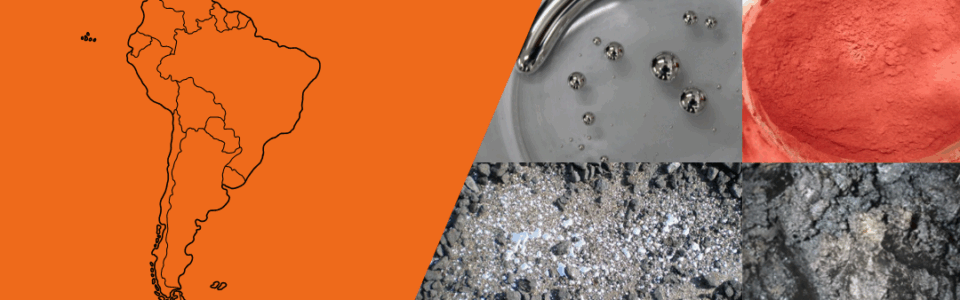
Latin America has always stood out to us as one of the promising markets for sustainable waste management and resource recovery. With its rapid industrial growth, increasing environmental regulations, and a strong push for cleaner technologies, the region offers unique opportunities where innovative solutions really make a difference. That’s exactly where we, at econ industries, see our role: bringing practical, sustainable technologies to address these challenges together with local partners.
For more than 20 years, we’ve been developing and delivering efficient, low-emission technologies for the safe treatment of hazardous wastes and contaminated materials. In Latin America, the need is especially strong when it comes to mercury wastes, mercury-contaminated soils, and oily residues such as tank bottoms and NORM waste, drill cuttings and much more. One solution that sparks a lot of interest locally is our Mobile Mercury Conversion Unit (MMCU). It allows elemental mercury to be safely stabilized on site – something particularly relevant for the chlor-alkali industry, mining companies, and the ASGM sector.
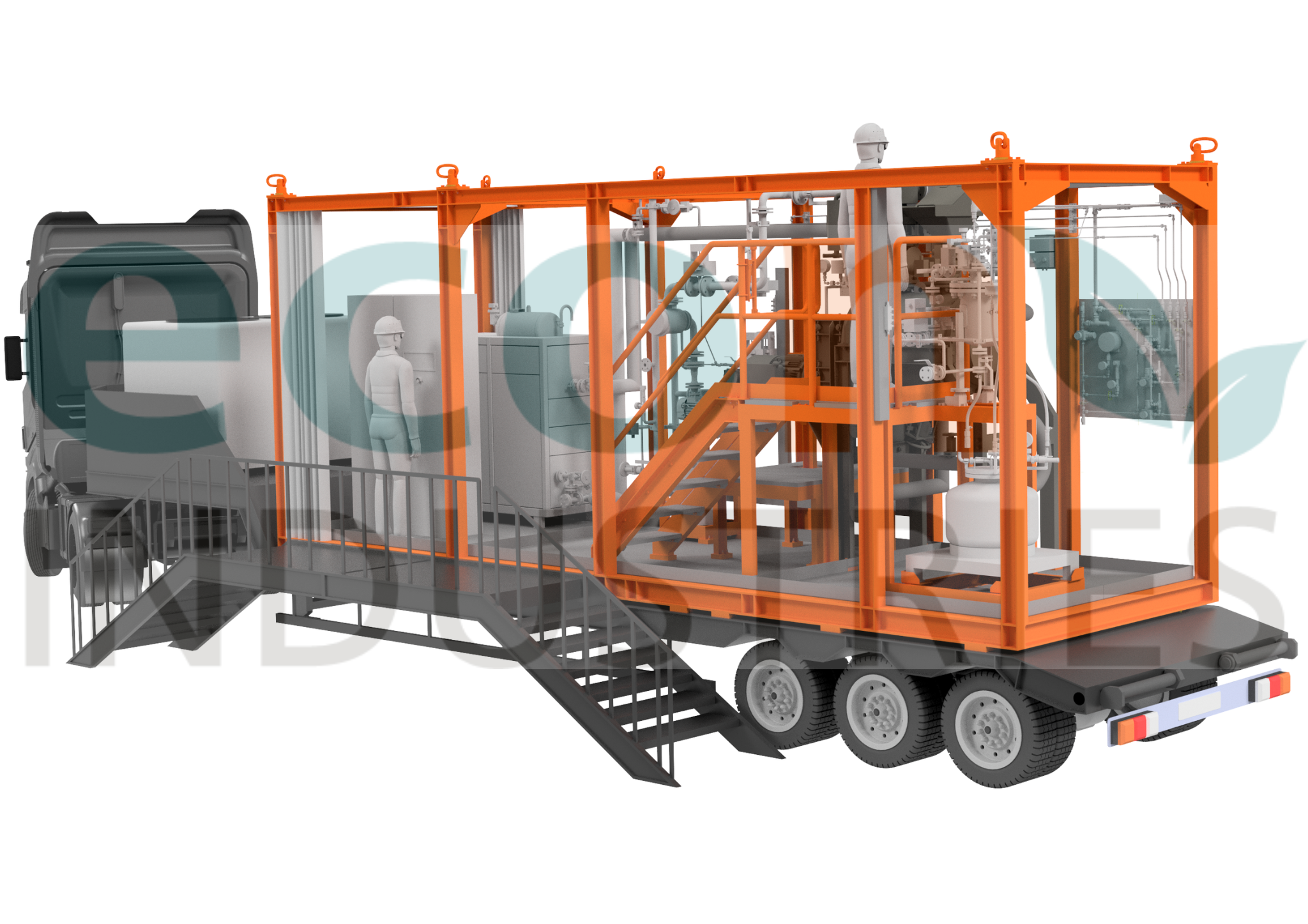 Figure 1: Rendering of mobile mercury conversion unit mounted on a truck ready for on-site treatment
This September and October, we’re excited to be back in South America. We’ll be meeting with companies, institutions, and strategic partners to further strengthen our presence in the region. We will be at PERUMIN in Arequipa, Peru (22–26 September). Together with the Bavarian Chamber of Commerce for Latin America, we’ll also join the German Peruvian Technology Breakfast on 24 September – this is a great opportunity to exchange ideas and learn more about local needs. If you’ll also be in the region, let us know, we will be more than happy to stop by, catch up, and discuss your specific challenges in hazardous waste management directly on-site.
Our collaboration with the United Nations Environment Programme (UNEP) in Mexico and Brazil is something we’re especially proud of. It reflects our long-term commitment to mercury stabilization and safe waste management. In Mexico, we are supporting UNEP, SEMARNAT, and CYDSA S.A. de C.V. converting and decommissioning the country’s last two mercury-cell chlor-alkali facilities. This includes planning for mercury waste management and remediation of contaminated sites, with the deployment of a VacuDry® 3 000 for contaminated soils and a Mobile Mercury Conversion Unit (MMCU) to stabilize elemental mercury as part of the decommissioning strategy.
In Brazil, we are collaborating with UNEP to assist the chlor-alkali sector in phasing out mercury-based technologies. In this project we would manufacture a MMCU dedicated to Brazil and South America – providing a cost-effective, on-site solution for mercury conversion and safe disposal. The initiative is also highly relevant to the artisanal and small-scale gold mining (ASGM) sector, where sustainable mercury management is urgently needed, and it ties directly into UNEP’s broader strategy for supporting a mercury-free chlor-alkali industry.
Of course, mercury use in mining remains one of the toughest environmental challenges in Latin America. In the whole South America exporting mercury waste abroad is extremely costly and often not a practical option. That’s why local treatment makes such a difference. With our MMCU, elemental mercury can be converted on-site into stable cinnabar (HgS) for safe disposal, while our VacuDry® technology helps recover valuable resources. These solutions are already making an impact in many parts of the world – from India to upcoming projects in Australia – and we’re eager to continue bringing them to Latin America.
We are eager to be traveling across South America, and it will be a great opportunity to meet! Whether you are in Brazil, Colombia, Ecuador, Peru, Mexico, or Argentina – we see the great potential and rich nature that Latin America has, and we want to keep it clean through responsible waste management. Let’s work together to make it happen.