
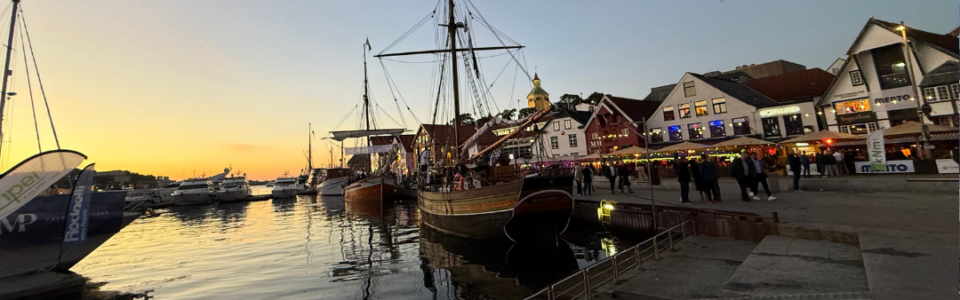
Last week, econ industries attended ONS 2026 in Stavanger, Norway, one of the energy industry’s key international meeting points.
During the event, Jan Borbet, Head of Sales & Special Projects at econ industries, held numerous valuable discussions with customers and industry stakeholders about the challenges currently facing the North Sea and the wider oil and gas sector.
A growing challenge for the North Sea
The region is facing a complex paradox. While substantial quantities of oil continue to be produced, significant volumes of challenging waste are generated at the same time.
These waste streams include oily waste, tank bottoms and sludges contaminated with mercury and naturally occurring radioactive material (NORM). They result not only from ongoing oil and gas production, but increasingly from decommissioning activities across the region.
Finding safe, efficient and sustainable ways to treat these complex materials is therefore becoming increasingly important.
Mercury requires more than stopgap measures
Mercury is one particularly pressing challenge. Contamination levels are increasing in parts of the region, while effective treatment options remain limited – especially when large quantities of mercury-containing waste need to be processed safely and sustainably.
Following the discussions at ONS 2026, Jan Borbet summarized the situation:
“Everyone can see the problem and there are treatment options available, but if we are honest, there is no real solution as yet – just stopgap measures. However, this is where econ industries brings more than 20 years of expertise. Mercury is part of our DNA and with our VacuDry® technology, we can provide the world-leading solution for a cost-effective, efficient and sustainable treatment of oil sludges and tank bottoms contaminated with mercury.”
econ industries has more than 20 years of experience developing treatment technologies for industrial hazardous waste. With VacuDry® vacuum distillation technology, harmful substances can be separated from contaminated materials in a fully encapsulated system, with a strong focus on resource recovery and minimizing carbon emissions.
From hazardous waste to sustainable solutions
The conversations at ONS 2026 once again highlighted the importance of practical and reliable treatment solutions for the North Sea’s evolving waste streams.
Alongside the treatment of mercury- and NORM-contaminated waste, decarbonization, resource recovery and circularity remain key priorities for the oil and gas industry.
We would like to thank everyone who took the time to meet and exchange ideas with us in Stavanger.
econ industries looks forward to continuing the dialogue and working with customers and partners to turn today’s hazardous waste challenges into more sustainable solutions for tomorrow.